01
Agentic Workflow Automation
Use AI agents to perform defined multi-step tasks across applications, data sources and business workflows.

Bring applications, APIs, data and business workflows together through integration and automation built around your existing enterprise environment.







AI-Driven Automation
Connect AI agents with enterprise applications, APIs and data so they can retrieve information and execute approved workflows under defined permissions and governance.
01
Use AI agents to perform defined multi-step tasks across applications, data sources and business workflows.
02
Create controlled interfaces that allow AI agents to discover and interact with approved enterprise tools and data.
03
Enable agents to call APIs, update records, trigger workflows and retrieve operational information based on user intent.
04
Define permissions, approvals and escalation points so autonomous actions remain within business and security policies.
What We Offer
Connect enterprise applications and data, then automate the processes that move information, decisions and actions across them.
Enterprise Integration
Service 01 / 08
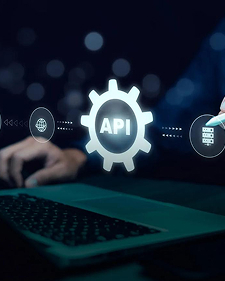
Connect internal and external applications through REST, SOAP, GraphQL and custom APIs built around defined business workflows.
Service 02 / 08
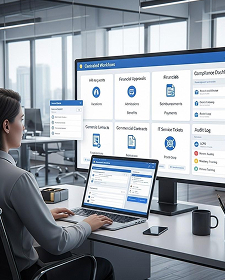
Bring ERP, CRM, HR, finance, commerce and operational platforms together so information can move across business functions.
Service 03 / 08
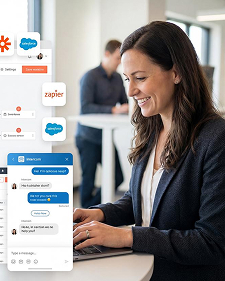
Integrate cloud applications, third-party platforms and external services without forcing teams to replace the systems they already use.
Service 04 / 08

Connect cloud applications, on-premise systems and data environments through controlled integration architectures.
Automation & Orchestration
Service 05 / 08

Automate repetitive workflows, approvals, notifications and system updates across multiple enterprise applications.
Service 06 / 08

Coordinate multi-step processes across APIs, applications, data and business rules through centralized orchestration.
Service 07 / 08

Combine APIs, automation and AI to handle document processing, routing, decisions and exception-based workflows.
Service 08 / 08

Trigger actions automatically when business events occur across applications, transactions, devices or data streams.
API Governance
Apply authentication, authorization, encryption and controlled access to API endpoints and connected systems.
Manage API design, versioning, documentation, deployment and retirement through structured governance.
Track availability, latency, errors, usage and workflow execution across integrations.
Define which users, systems and AI agents can access specific services, actions and enterprise data.

Why Programming.com
We combine application engineering, cloud, data, AI and automation expertise to connect systems without adding unnecessary complexity.
01
Design reusable APIs and connectors around clear contracts, business rules and long-term maintainability.
02
Integrate with the technology already running your operations instead of forcing unnecessary platform replacement.
03
Connect systems and automate the workflows between them through one engineering team.
04
Extend existing workflows with AI assistants and agents while maintaining controlled access to enterprise systems.
05
Build authentication, authorization, monitoring and auditability into integration architecture from the start.
06
Support integration initiatives from discovery and architecture through development, testing, deployment and ongoing improvement.
Case Studies
CASE STUDY 01 — ENTERPRISE CUSTOMER SUPPORT PLATFORM
We implemented a bi-directional integration that brought AI-driven customer insights directly into existing service workflows while keeping the CRM as the central system of record.
BI-DIRECTIONAL
API integration
AI-POWERED
CRM intelligence
CONNECTED
Service workflows

CASE STUDY 02 — DIGITAL HEALTH PLATFORM
We implemented an integrated health platform bringing patients, care teams, monitoring and operational workflows into one connected environment.
CONNECTED
Patient care
CENTRALIZED
Care workflows
INTEGRATED
Health operations

CASE STUDY 03 — GLOBAL LIFE SCIENCES ENTERPRISE
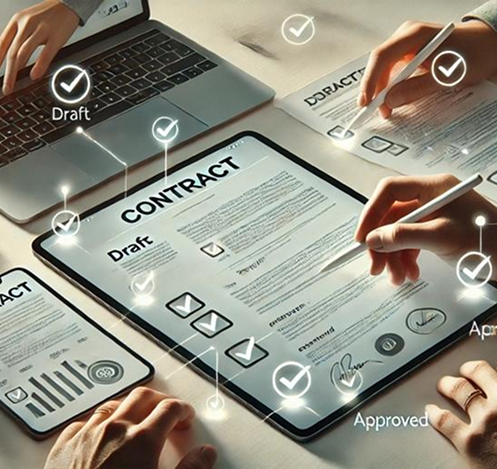
We developed a connected contract workflow covering creation, approvals, document management and renewal notifications through an enterprise CRM environment.
AUTOMATED
Approval workflows
CENTRALIZED
Document management
CONNECTED
Contract lifecycle
CASE STUDY 04 — NONPROFIT ORGANIZATION
We built a custom integration connecting CRM and web systems to support events, volunteer registration, fundraising and data migration through one connected workflow.
CRM + WEB
Integration
CONNECTED
Event workflows
CENTRALIZED
Data management

Connected Enterprise
Build an integration layer that allows applications, data platforms, APIs and automation workflows to work together without creating unnecessary platform dependency.
Industries
Different industries rely on different platforms, data flows and workflows. We build integrations around those operational realities.

01
Connected Care & Data
Connect clinical, patient, CRM, analytics and operational systems while supporting controlled data exchange.
Explore Healthcare02
Connected Financial Operations
Integrate banking, payment, CRM, data and compliance systems across customer and operational workflows.
Explore Finance & Banking03
Connected Commerce
Connect commerce, CRM, inventory, order, payment and fulfillment systems across digital and physical channels.
Explore Retail & E-Commerce04
Connected Operations
Integrate ERP, production, inventory, IoT and supply chain systems across manufacturing environments.
Explore Manufacturing05
Real-Time Operations
Connect transportation, fleet, warehouse, shipment and customer systems around real-time operational workflows.
Explore Logistics & Transportation06
Automated Policy & Claims Workflows
Connect policy, claims, CRM, document and analytics systems to reduce manual handoffs.
Explore Insurance07
Connected Service Operations
Integrate customer, billing, network and service-management systems across telecom workflows.
Explore Telecommunications08
Connected Digital Experiences
Connect content, subscription, CRM, commerce and audience systems across digital platforms.
Explore Media & EntertainmentHow We Build

Map systems, APIs, data flows, workflow dependencies and business requirements.

Define the integration model, API contracts, orchestration patterns, security and data movement.

Build APIs, connectors and integration services across enterprise applications and external platforms.

Implement business rules, workflow automation, event triggers and intelligent process orchestration.

Test integrations, API behavior, data integrity, security, error handling and workflow performance.

Monitor integrations and extend automation as systems, processes and business requirements change.
Blogs & Insights
 Design
How do you create compelling presentations that wow your colleagues and impress your managers?
Read More Product
How do you create compelling presentations that wow your colleagues and impress your managers?
Read More Software
How do you create compelling presentations that wow your colleagues and impress your managers?
Read MoreFAQ
Explore common questions about APIs, enterprise integration, workflow automation, AI agents and integration modernization.
API integration services connect applications, platforms and data sources so they can exchange information and trigger actions across business workflows.
We can integrate CRM, ERP, HRMS, finance, commerce, cloud, data, service-management and third-party platforms through APIs, connectors and integration services.
Yes. Legacy applications can be connected through APIs, middleware, adapters and integration layers without requiring immediate replacement of the underlying system.
Business process automation uses software, APIs and workflow rules to automate repetitive tasks, approvals, notifications and data movement across business systems.
Yes. AI agents can use controlled APIs and integration tools to retrieve information or execute approved actions across enterprise systems. Access, permissions and governance should be defined before those actions are enabled.
Model Context Protocol provides a standardized way for AI applications and agents to discover and interact with tools, APIs and data sources. In enterprise environments, it can be combined with identity, authorization and governance controls.
Yes. Hybrid integration architectures can connect cloud applications with on-premise platforms while maintaining controlled access and secure data movement.
Security can include authentication, authorization, encryption, API gateways, access policies, secrets management, monitoring and audit trails.
Yes. Existing point-to-point connections can be redesigned into reusable APIs, managed connectors, event-driven workflows and governed integration architectures.
We typically begin by identifying the systems, workflows, data flows and business problems involved. From there, we define the integration architecture and delivery roadmap before development and testing.