
AI Trend Cluster
DHL identifies AI as the leading technology trend cluster shaping the future impact of supply chains.

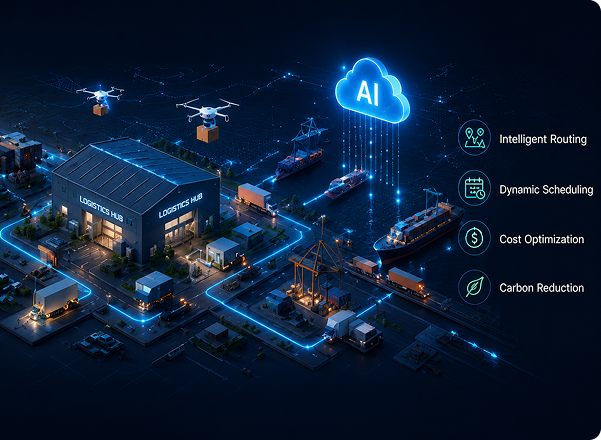
Build connected logistics platforms that combine AI, real-time data, automation and cloud technology to improve transportation, fleet, warehouse and supply chain operations.

From Connected Operations to Intelligent Logistics
Modern logistics is moving toward connected, AI-powered operations. Programming.com brings together AI, IoT, cloud, data and automation to improve visibility, planning and execution.
Key challenges we address:
The Logistics Technology Shift
Gartner forecasts supply-chain management software with agentic AI capabilities to reach $53 billion in annual spend by 2030, while AI and robotics lead the trends reshaping logistics operations.
DHL identifies AI as the leading technology trend cluster shaping the future impact of supply chains.
Robotics ranks second among DHL's global logistics technology trend clusters, with adoption expanding across warehouses and logistics operations.
DHL's latest Logistics Trend Radar tracks 40 trends shaping the future of logistics and supply-chain operations.
What We Build
Build connected logistics platforms across transportation, fleet, warehousing and supply chain operations using AI, IoT, cloud, data and automation.
Transportation & Connected Operations
Service 01 / 08
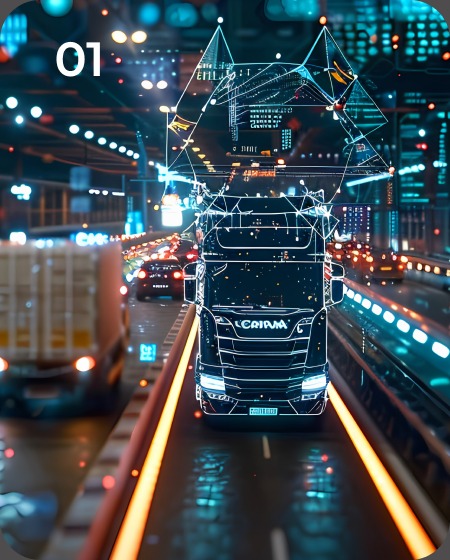
Use AI to predict disruptions, optimize decisions and automate complex logistics workflows across transportation and supply chain operations.
Service 02 / 08
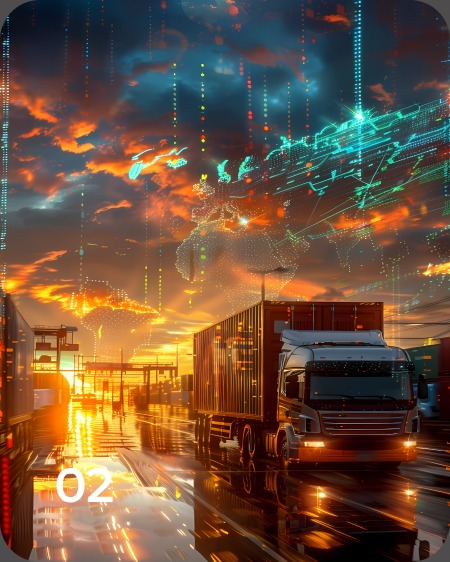
Build digital transportation platforms that improve planning, freight management, dispatch, carrier coordination and delivery execution.
Service 03 / 08

Connect vehicles, assets and operational data to improve fleet visibility, utilization, safety and maintenance.
Service 04 / 08
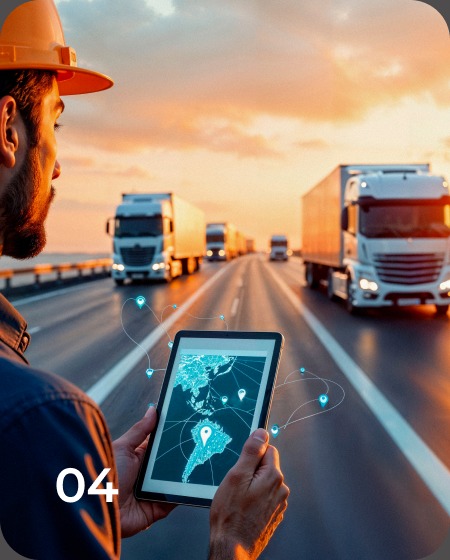
Create a unified operational view of shipments, fleets and logistics events with real-time tracking and intelligent exception management.
Warehouse & Supply Chain Intelligence
Service 05 / 08
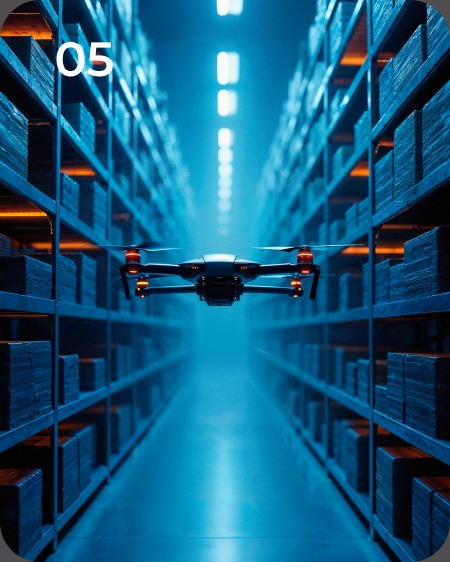
Connect warehouse systems, IoT, automation and AI to improve inventory accuracy, fulfillment and warehouse operations.
Service 06 / 08
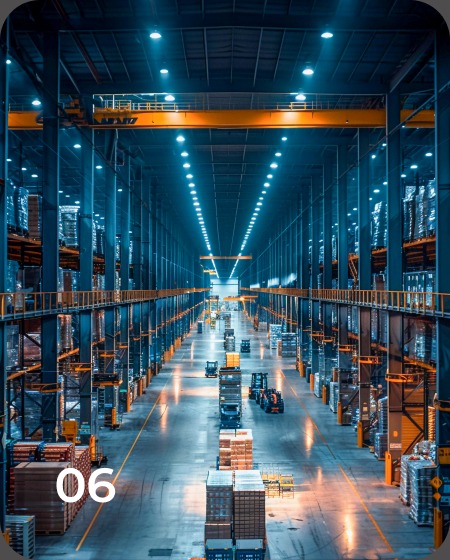
Turn supply chain data into predictive insights that support demand planning, inventory decisions, capacity management and risk mitigation.
Service 07 / 08

Model logistics networks and warehouse environments to test scenarios, identify bottlenecks and support better operational decisions.
Service 08 / 08

Build technology that helps logistics organizations track environmental impact, improve resource efficiency and manage compliance.
Software Built Around Your Logistics Operations
01
Connect real-time logistics data with AI-driven visibility, prediction and exception management.
02
Manage routing, dispatch, carriers, shipments and delivery operations through one connected platform.
03
Connect WMS, inventory, automation, IoT and robotics to improve warehouse execution.
04
Combine data, analytics, forecasting and AI to support planning, risk management and operational decisions.
Why Programming.com
Build connected logistics platforms across transportation, fleet, warehousing, supply chain and automation with AI, data, cloud and enterprise engineering.
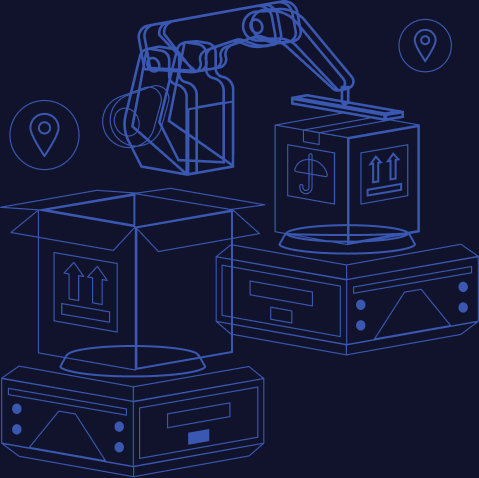
Build AI, analytics and data platforms that turn logistics data into operational intelligence.
Integrate cloud, IoT, telematics, APIs and enterprise systems across the logistics ecosystem.
Design technology around transportation, fleet, warehouse and supply-chain workflows.
Connect new platforms with TMS, WMS, ERP, CRM, IoT and legacy enterprise systems.
Access engineering teams across AI, data, cloud, product engineering, QA, DevOps and cybersecurity.
Support discovery, architecture, development, integration, testing, deployment and ongoing modernization.
Case Studies
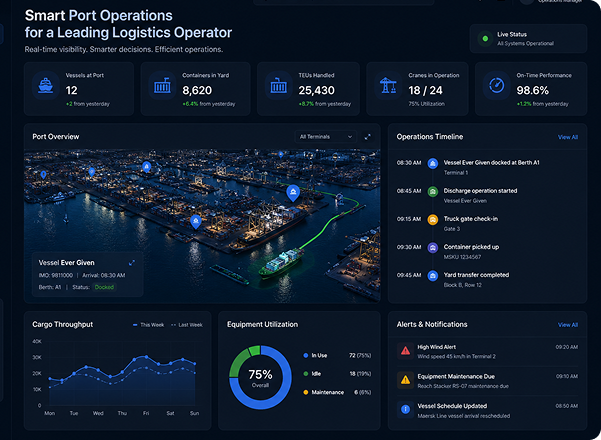
CASE STUDY 1 — LEADING LOGISTICS OPERATOR
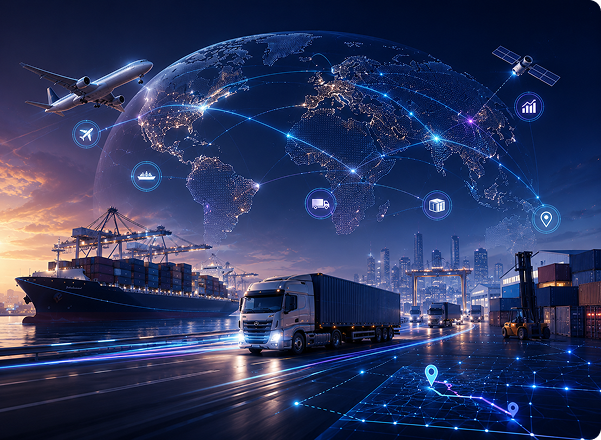
Transforming cargo movement and port operations through real-time visibility, operational intelligence, and digital coordination.
Real-Time
Cargo Visibility
24/7
Operate Live, Monitoring
Faster
Real Coordination
Connected
Just to Know
CASE STUDY 2 — GLOBAL TRANSPORTATION ENTERPRISE
Enabling predictive maintenance, asset tracking, and operational optimization through AI-enabled powered fleet management.
70%
Asset Visibility
Real-Time
Heat Tracking
Reduced
Maintenance Costs
IoT-Driven
Operations
CASE STUDY 3 — LEADING SUPPLY CHAIN PROVIDER
Delivering end-to-end shipment visibility, carrier collaboration, and transportation intelligence across logistics networks.
Real-Time
Alignment Tracking
Connected
Carrier Network
Faster
Delivery Updates
Enterprise
Logistics Updates
CASE STUDY 4 — GLOBAL MANUFACTURING ENTERPRISE
Connecting suppliers, distributors, and logistics partners through a unified supply chain visibility ecosystem.
60%
Inventory Visibility
Real-Time
Supply Network
Optimized
Logistics Costs
Connected
Supply Chain

CASE STUDY 5 — GLOBAL E-COMMERCE LOGISTICS PROVIDER
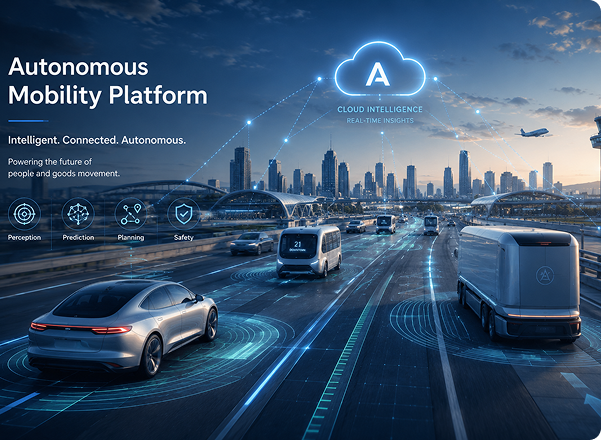
Optimizing last-mile delivery operations with real-time route optimization, driver tracking, and customer notifications.
Autonomous
Fleet Operations
Real-Time
Route Intelligence
Optimized
Fleet Utilization
Smart
Mobility Ecosystem
FAQ
Have questions about modernizing logistics operations? Start with the answers enterprises ask most.
AI is helping logistics organizations improve forecasting, route planning, ETA prediction, exception management, inventory decisions and operational automation. AI is increasingly moving from analytics into execution.
Agentic AI uses software agents that can plan, execute and adapt across multi-step logistics workflows, such as shipment coordination, exception handling and supply-chain planning.
Yes. AI agents can automate individual tasks today and increasingly coordinate multiple steps across planning and execution workflows, with appropriate human oversight and governance.
A logistics control tower provides a centralized view of shipments, fleets, inventory, carriers and operational events, helping teams monitor performance and respond to exceptions in real time.
Digital twins create virtual representations of logistics networks, warehouses or transportation operations that can be used for simulation, scenario planning, capacity analysis and decision support.
IoT connects vehicles, assets, sensors and equipment to provide real-time operational data for tracking, predictive maintenance, utilization, safety and fleet optimization.
AI, robotics, computer vision, IoT, warehouse automation and intelligent simulation are increasingly being used to improve inventory visibility, fulfillment, workforce productivity and warehouse execution.
Yes. We can modernize legacy transportation and warehouse platforms through cloud migration, APIs, microservices, data modernization, AI integration and modern user experiences while preserving critical business workflows.
Predictive analytics can support demand forecasting, ETA prediction, inventory optimization, capacity planning, maintenance and early identification of operational risks.
The industry is moving toward AI-native, hyperconnected and increasingly autonomous operations, combining Agentic AI, physical AI, robotics, real-time data, digital twins and intelligent simulation.

