01
Network Operations & Service Assurance
Monitor performance, manage faults and connect network health with service and subscriber impact.

Create modern telecom platforms that bring together OSS/BSS, network operations, AI-driven intelligence and digital subscriber experiences.

THE TELECOM TECHNOLOGY SHIFT
AI-Native Operations
Move from reactive monitoring toward predictive network intelligence, faster root-cause analysis and increasingly automated operations.
Modern OSS/BSS
Replace rigid, siloed platforms with modular systems that connect network operations, business workflows and digital services.
Programmable Networks
Expose network capabilities through APIs that connect telecom infrastructure with applications, enterprises and partner ecosystems.
New Digital Services
Create new services around 5G, IoT, differentiated connectivity, network intelligence and enterprise use cases.
What We Build
Build connected platforms across network operations, business systems, subscriber experiences and intelligent telecom workflows.
Core Telecom Platforms
Service 01 / 08

Build and modernize operations support systems for network monitoring, provisioning, inventory, service assurance and operational workflows.
Service 02 / 08

Create connected platforms for product, order, subscription and customer management across telecom business operations.
Service 03 / 08

Build billing, charging, payment and revenue workflows across consumer, enterprise and subscription-based telecom services.
Service 04 / 08

Create digital onboarding, account management, self-service and support experiences across web and mobile channels.
Intelligent & Connected Telecom
Service 05 / 08

Apply AI and machine learning to network telemetry, anomaly detection, predictive operations and service intelligence.
ExploreService 06 / 08

Connect network, subscriber, service and operational data for real-time monitoring, reporting and predictive insights.
ExploreService 07 / 08

Connect OSS/BSS, network services, enterprise applications and partner ecosystems through APIs and modern integration architectures.
ExploreService 08 / 08

Build software for device connectivity, telemetry, management and connected enterprise services across IoT environments.
ExploreTELECOM TECHNOLOGY SOLUTIONS
Support network, subscriber and commercial operations with connected software, automation and telecom intelligence.
01
Monitor performance, manage faults and connect network health with service and subscriber impact.
02
Connect provisioning, inventory, billing, CRM, orders and service workflows across existing and modern telecom platforms.
03
Automate provisioning, configuration and operational workflows across distributed network environments.
04
Create onboarding, self-service, support and personalized experiences across digital telecom channels.
05
Use rules, analytics and anomaly detection to identify suspicious activity, leakage and high-risk events.
06
Build software capabilities around 5G, edge environments, network slicing, IoT and differentiated connectivity.
AI IN TELECOM
Connect network telemetry, AI and automation to detect issues earlier, improve operational decisions and support increasingly autonomous network operations

Identify unusual patterns across network alarms, telemetry and performance data before they develop into larger service issues.

Use historical and real-time data to identify emerging performance, capacity and reliability risks.

Correlate alarms, events and operational context to help engineering teams identify likely causes faster.

Connect network performance with service and subscriber impact to prioritize operational response.

Use governed AI agents to support analysis and coordinate selected operational workflows across network and OSS environments.

Connect detection, decisioning and orchestration to automate approved actions while maintaining human oversight.
MODERN TELECOM ARCHITECTURE
Connect customer experiences, financial systems, data, AI and security into a unified technology ecosystem.


Subscribers | Agents | Partners | Enterprise Customers
Move from tightly coupled systems toward modular services that can be updated and scaled independently.
Bring network, subscriber, service and operational information together for analytics and AI.
Expose selected network capabilities to applications, enterprises and partner ecosystems.
Why Programming.com
Bring software, cloud, data, AI and network engineering together to modernize telecom technology around real operational requirements.
01
Connect telecom-domain requirements with application, platform and enterprise software engineering.
02
Apply AI and analytics to network and operational data where they improve visibility and decision-making.
03
Extend legacy environments through APIs, modular services and phased modernization instead of unnecessary replacement.
04
Connect OSS, BSS, network systems, enterprise applications and digital channels around shared workflows.
05
Build cloud and data foundations that support analytics, automation and modern digital telecom services.
06
Embed testing, secure engineering and reliability practices throughout telecom software delivery.
Case Studies
CASE STUDY 1 — LEADING TELECOM OPERATOR
The case study illustrates the use of a digital super app to enhance customer experience and drive revenue growth. The app features a variety of services, including data, voice, and messaging, and is available on multiple platforms, including smartphones, tablets, and PCs. The app has been shown to increase customer satisfaction and loyalty, and has been credited with driving a 20% increase in customer retention.
500M+
SUBSCRIBERS SERVED
24/7
DIGITAL ACCESS
MULTI-SERVICE
PLATFORM EXPERIENCE
MOBILE-FIRST
CUSTOMER JOURNEY

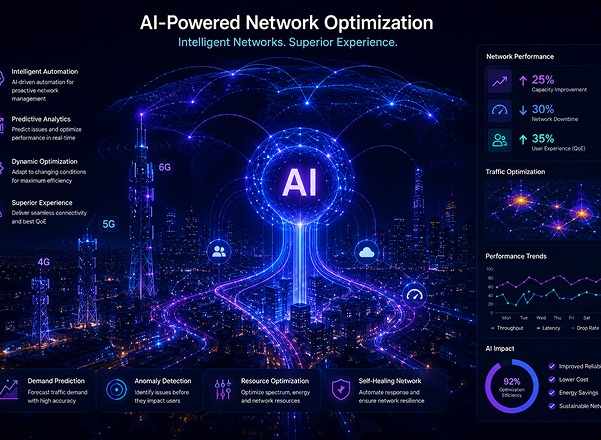
CASE STUDY 2 — GLOBAL TELECOM LEADER
The case study illustrates the use of AI-powered network optimization to improve network performance and reduce costs. The AI-powered network optimization platform uses machine learning algorithms to analyze network data and identify areas for improvement. The platform has been shown to reduce network downtime by 30% and increase network capacity by 20%.
AI-DRIVEN
NETWORK INTELLIGENCE
REAL-TIME
PERFORMANCE INSIGHTS
PROACTIVE
ISSUE DETECTION
GLOBAL
NETWORK OPTIMIZATION
CASE STUDY 3 — GLOBAL ENTERPRISE
The case study illustrates the use of a unified communications platform to improve collaboration and productivity. The platform includes a variety of features, including video conferencing, instant messaging, and file sharing. The platform has been shown to increase employee satisfaction by 25% and reduce costs by 15%.
ONE PLATFORM
UNIFIED COMMUNICATIONS
SECURE
ENTERPRISE COLLABORATION
MULTI-CHANNEL
CONNECTIVITY
CLOUD-BASED
COMMUNICATION HUB

CASE STUDY 4 — LEADING TELECOM ENTERPRISE
The case study illustrates the use of an intelligent customer support platform to improve customer satisfaction and reduce costs. The platform includes a variety of features, including self-service portals, chatbots, and AI-powered agents. The platform has been shown to increase customer satisfaction by 15% and reduce costs by 10%.
24/7
AI SUPPORT
INSTANT
ISSUE RESOLUTION
AI-POWERED
VIRTUAL ASSISTANT
ENHANCED
CUSTOMER EXPERIENCE

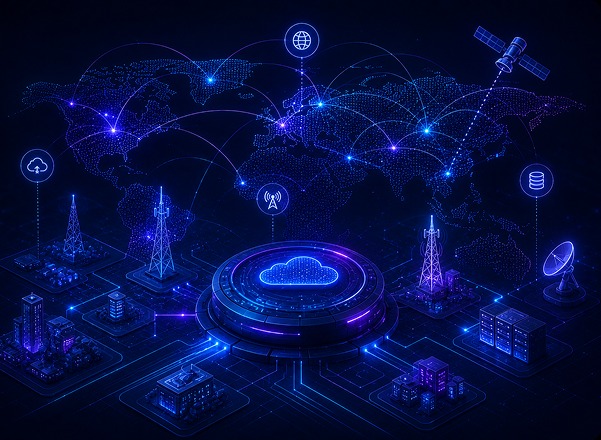
CASE STUDY 5 — GLOBAL TELECOM PROVIDER
Enabling next-generation 5G network management with real-time monitoring, automated orchestration, and intelligent resource allocation.
REAL-TIME
DEVICE MONITORING
CONNECTED
NETWORK ECOSYSTEM
CLOUD-BASED
MANAGEMENT PLATFORM
SCALABLE
INFRASTRUCTURE OPERATIONS
Blogs & Insights
 Design
How do you create compelling presentations that wow your colleagues and impress your managers?
Read More Product
How do you create compelling presentations that wow your colleagues and impress your managers?
Read More Software
How do you create compelling presentations that wow your colleagues and impress your managers?
Read MoreFAQ
Explore common questions about OSS/BSS, network automation, AI, 5G and custom telecommunications software development.
Telecom software development services cover the design, development, modernization and integration of software for network operations, OSS/BSS, billing, subscriber management, analytics and digital telecom services.
Programming.com can support OSS/BSS applications, network operations platforms, billing systems, subscriber applications, telecom analytics, API integrations, AI-enabled workflows and connected-device platforms.
OSS supports technical and network operations such as provisioning, inventory, monitoring and service assurance. BSS supports commercial and customer operations such as products, orders, billing, subscriptions and customer management.
Yes. Existing telecom platforms can be modernized through APIs, modular architecture, cloud services, data integration and phased enhancement or replacement of legacy components.
AI can support anomaly detection, predictive network analysis, root-cause investigation, service assurance, fraud detection, subscriber analytics and network automation.
Network automation uses software, rules and orchestration to automate activities such as provisioning, configuration, monitoring and selected operational responses.
Yes. APIs, integration platforms and event-driven architectures can connect new applications with OSS/BSS, network platforms, enterprise systems and external services.
We can support software and engineering initiatives around 5G environments, network operations, connected services, analytics, integrations and related enterprise applications based on project requirements.
Security can be incorporated through identity and access controls, secure APIs, encryption, application security testing, monitoring and secure development practices across the software lifecycle.
We begin by understanding the network environment, business requirements, existing OSS/BSS platforms, data flows and integrations. From there, we define the architecture, engineering approach and delivery roadmap.